5 Easy Oral Hygiene Tips for a Beautiful Smile
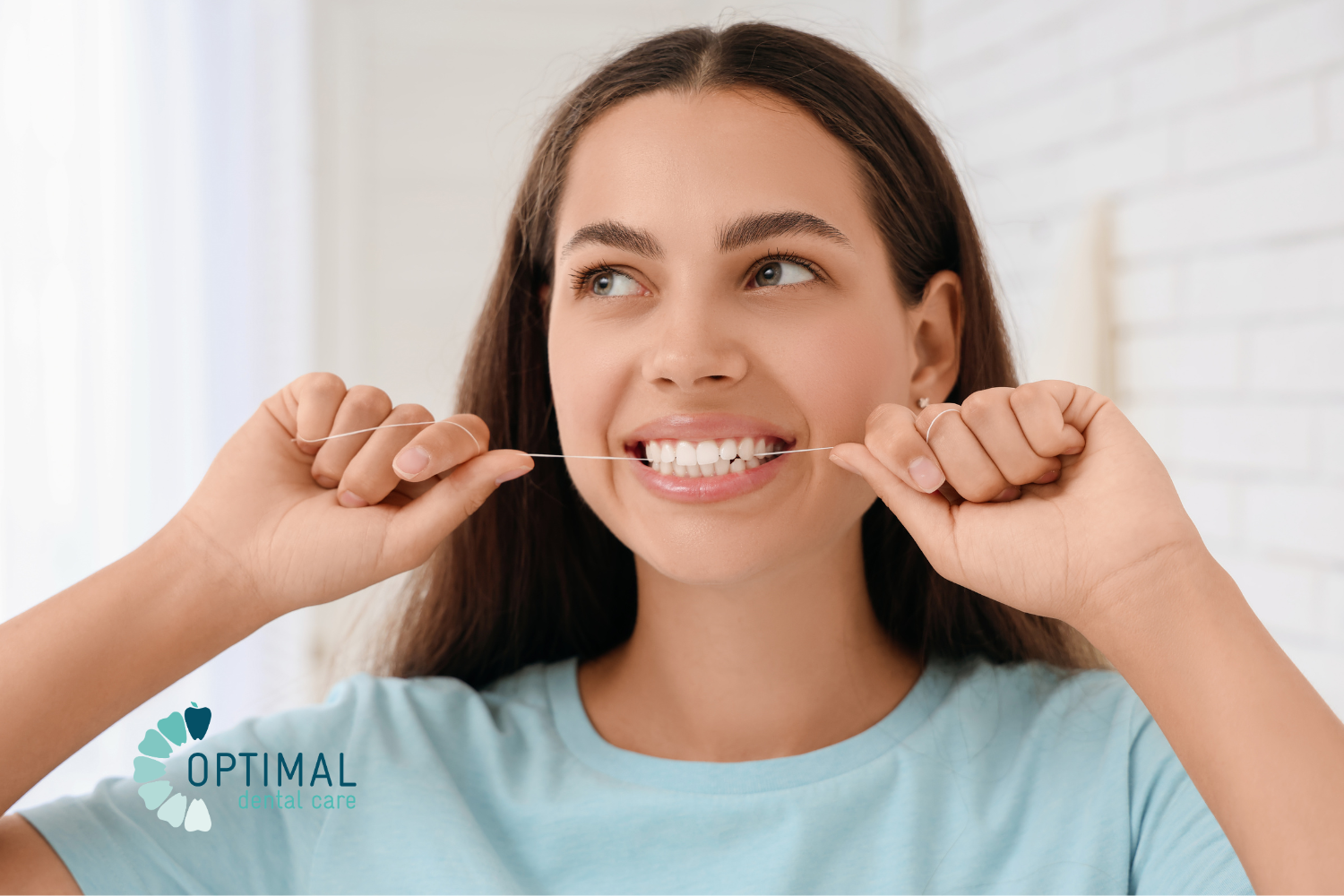
Your daily habits matter more than you think. Small changes to your routine can make a big difference to the health and look of your smile, and the good news is, most of them take just minutes a day.
Here's what our dentists at Optimal Dental Care recommend:
1. Floss Daily
Flossing is one of the most important yet frequently skipped steps in a daily oral care routine.
While brushing cleans the surfaces of your teeth, it cannot reach the tight spaces between them. Flossing removes plaque and food particles from these gaps, which helps prevent cavities, gum disease, and bad breath.
There are several effective ways to clean between your teeth, including:
- String floss
- Flossettes
- Interdental brushes
- Water flossers
The best way to clean between your teeth is simply the one you'll actually use! So find what feels comfortable and make it a daily habit.
2. Use Fluoride Toothpaste
Not all toothpastes are created equal. Fluoride is a naturally occurring mineral that helps strengthen your tooth enamel (the hard outer layer that protects your teeth from decay). Using a fluoride toothpaste twice a day is one of the simplest and most effective things you can do to help prevent cavities.
When should kids start using fluoride toothpaste?
0–18 months
· Brush gums/teeth with a soft brush and water only. No toothpaste needed.
18 months–6 years
· Use a children’s toothpaste with fluoride (Australian kids’ formulas have lower fluoride than adult paste).
· Use only a smear/tiny rice‑grain amount.
6 years and older (and adults)
· Use a standard fluoride toothpaste. The typical fluoride range is 1000–1450 ppm.
· Use a pea‑sized amount.
3. Avoid Sugary Drinks
Soft drinks, fruit juices, sports drinks, and flavoured waters are among the biggest culprits when it comes to tooth decay and many people don't realise just how damaging they can be.
Here's what happens when you drink something sugary: the bacteria naturally present in your mouth feed on that sugar and produce acid as a by-product. That acid attacks your tooth enamel, weakening it over time and creating the conditions for cavities to form. The more frequently you sip on sugary drinks throughout the day, the longer your teeth are exposed to that acid cycle.
Healthier alternatives to try:
Water - always the best choice for your teeth and your body.
Herbal teas - naturally caffeine-free options like chamomile or peppermint are a great swap.
Milk - contains calcium, which is great for teeth, making it a much better option than soft drinks for children and adults alike.
Infused water - add fresh mint, cucumber, or berries to your water for a flavourful, tooth-friendly alternative.
4. Visit Your Dentist Every 6 Months
Even if you brush and floss diligently at home, a professional check-up every six months is an essential part of looking after your oral health. Here's why:
Professional cleans remove built-up tartar and stains that brushing alone can't shift. If you're a coffee or tea drinker, you'll notice a real difference, your teeth will look visibly cleaner and brighter after a professional polish.
Many dental issues including cavities and gum disease develop gradually and are completely painless in the early stages. By the time you notice discomfort, the problem may have progressed significantly. Regular check-ups allow your dentist to spot these issues early, when they're far easier (and less costly) to treat.
Skipping appointments doesn't make problems disappear, it gives them time to grow. A small cavity that could have been treated with a simple filling can become a root canal or extraction if left undetected. Preventive care is always more affordable and less invasive than restorative treatment.
At Optimal Dental Care, we believe in the power of early intervention and preventive care. Regular check-ups allow us to catch small issues before they become bigger ones, protecting your smile and your peace of mind.
5. Replace Your Toothbrush Every 3-4 Months
It's easy to forget about the tool you use every single day, but your toothbrush has a lifespan, and once the bristles wear down, it stops cleaning your teeth properly.
After about 3 months of regular use, the bristles begin to fray and lose their shape. Worn bristles are far less effective at removing plaque from your teeth and along the gumline, meaning you're putting in the effort but not getting the results.
On top of that, toothbrushes can harbour bacteria over time, especially if they're stored in a humid bathroom environment.
A few more reasons to swap it out regularly:
If you've been unwell with a cold or throat infection, replace your toothbrush as soon as you recover to avoid re-introducing those germs.
If the bristles look splayed, misshapen, or discoloured, even if it hasn't been three months, it's time for a new one.
For electric toothbrush users, the same rule applies to the brush head, make sure to replace it every three to four months.
A Healthy Smile Starts with Small Habits
Taking care of your teeth doesn't need to be complicated.
These small, consistent habits will give your smile the best possible foundation for a lifetime of good health and your future self will thank you for them.
Can't remember when you last came in for a clean and check-up? Click here to quickly book an appointment with our friendly dentists at Optimal Dental Care, we’d love to see you soon!